← Blog · 2026-10-22
Finding the Right Speaker for a Virtual Company Meeting
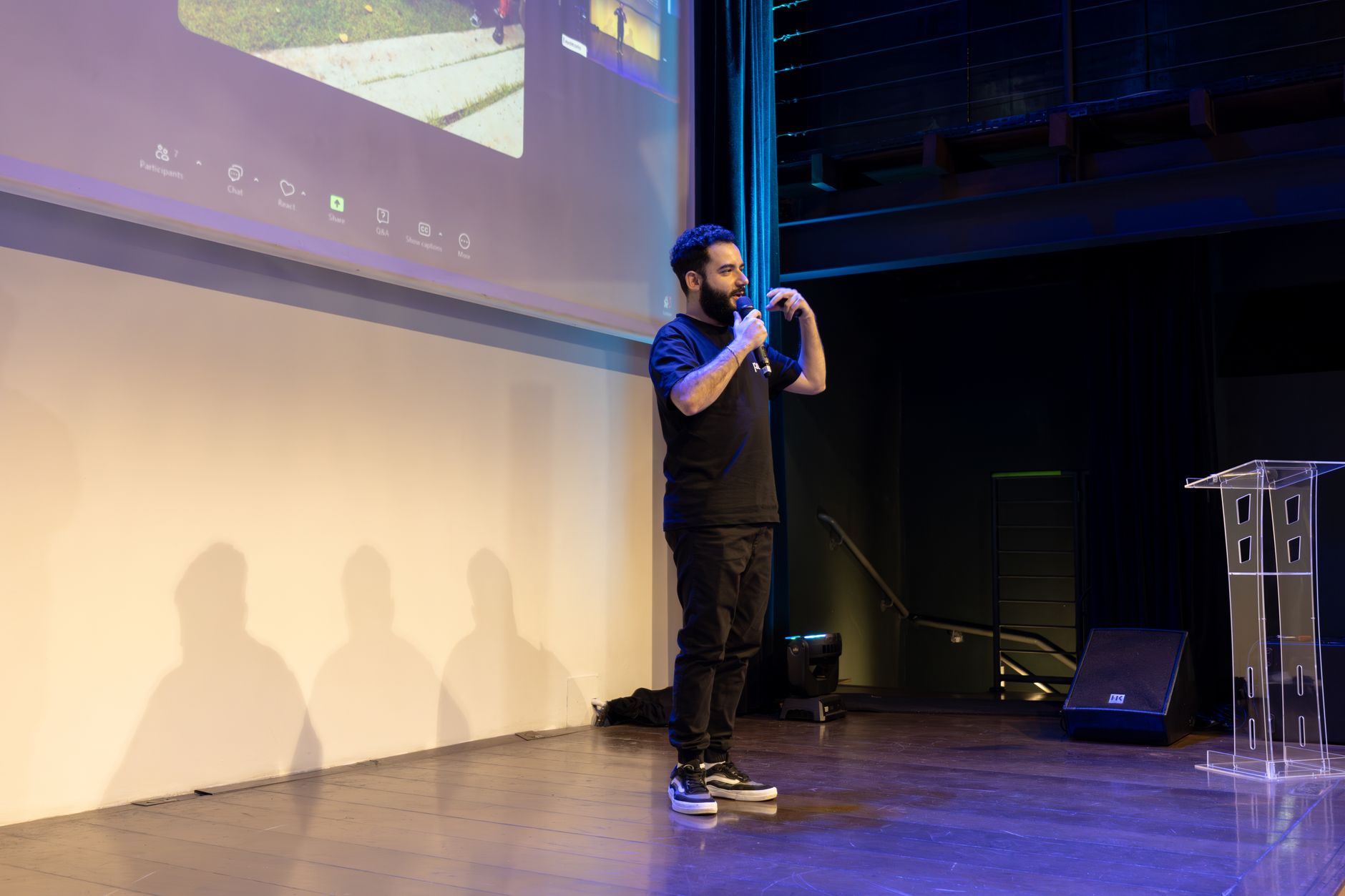
A speaker for a virtual company meeting has a harder job than people admit. In a room, a speaker can read the crowd, adjust, lean into a laugh that's building. On a screen, you're performing into a void of muted microphones and unreadable thumbnail faces, hoping the energy you're putting out is landing somewhere beyond your own webcam light. Most virtual keynotes fail not because the speaker lacks material, but because they never adjusted their instrument for the medium. I've done enough of these to know the format punishes anyone who treats it like a stage with worse lighting. It isn't. It's its own thing, and it rewards specific choices.
Why Virtual Changes the Math
In person, a speaker gets instant feedback: laughter, posture shifts, the particular silence that means a joke landed wrong. Virtual removes almost all of it. You're talking to a grid of boxes, half of them off, and the ones that are on are checking email in a second window. That changes what a speaker needs to do. Pacing has to tighten because attention spans on video calls are shorter and more porous than attention spans in a ballroom. Bits need to land faster. Setups need to be leaner. A ten-minute build that would work beautifully in a conference hall will lose a remote audience by minute four.
It also changes what honesty sounds like. On video, overacting reads as fake almost instantly, in a way it doesn't always in person where scale and energy are expected. The speakers who do well virtually tend to pull back slightly, talk a little more like they're talking to one person, because in a real sense they are. Every attendee is alone at their desk or kitchen table, watching a small rectangle. That's an intimate format pretending to be a mass one, and the best virtual speakers play to the intimacy rather than fighting it with volume.
What to Actually Look For
When you're booking a speaker for a virtual company meeting, ask how they've handled the format before, specifically. Not whether they've 'done virtual events' as a line on a sales sheet, but what they changed about their material and delivery to make it work. A speaker who says they do the exact same show whether it's live or on Zoom is telling you they haven't thought about it, which usually means the show will fall flat on screen.
Ask about length. Virtual audiences have different stamina than in-person ones, and a speaker who insists on their full sixty-minute set regardless of format is prioritizing their material over your meeting. Ask how they handle Q&A on video, since that's often where virtual sessions either come alive or die slowly in an unmoderated silence. And ask what they need from your production side — platform, lighting setup on your end for any hybrid pieces, how chat gets monitored — because a speaker who has useful, specific answers to production questions has clearly run this gauntlet before and learned from it.
Humor as the Connective Tissue
Humor does something on a virtual call that it can't quite do in a ballroom: it's the clearest, fastest proof that people are actually paying attention together. A big room laughing is a known social signal. A hundred muted boxes laughing is invisible unless the speaker builds in moments that make it visible — a poll, a chat prompt, a direct question that gets typed responses scrolling. The humor itself still needs to work on its own merits, but a virtual speaker who knows the format will also build small mechanisms to surface the fact that the laughter is happening, because otherwise everyone in that meeting assumes they're the only one enjoying it, and that's a lonely way to sit through a keynote.
This is also where a speaker with a genuine point of view does better than one performing generic corporate uplift. Virtual audiences are quicker to tune out anything that feels like filler, because the exit is one click away and nobody in the room can see them take it. Specific, honest, slightly irreverent material about work, attention, and the strange comedy of modern office life tends to hold people in a way that safe, broad motivational language does not. The screen forgives almost nothing. It rewards a speaker who actually has something to say.